A Brief History of Espresso
A Brief History of Espresso | Origins and Evolution
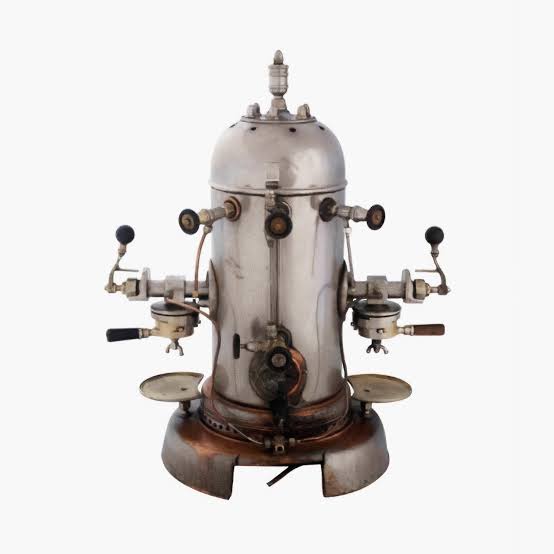 At the turn of the 20th century, a Milanese manufacturer named Luigi Bezzera was searching for a way to drastically cut down the brewing time of coffee for his employees. Building on an earlier, bulky bulk-brewing design patented by Angelo Moriondo in 1884, Bezzera realized that introducing steam pressure into a single-cup setup could force water through the coffee grounds in mere seconds.
In 1901, Bezzera patented his Tipo Gigante—the “Fast Coffee Machine.” While it succeeded in speeding up production, the intense heat of the steam often left the coffee with a distinctly burnt flavor. The real magic happened when the term espresso was coined, deriving from the Italian word for “expressed” or “pressed out,” while also carrying the connotation of a beverage prepared “expressly” on demand for an individual guest.
The commercial breakthrough came when industrialist Desiderio Pavoni purchased Bezzera’s patents in 1903. Pavoni was a brilliant marketer. Together, the two men refined the design, introducing a pressure release valve to stop the machine from spraying hot coffee on the barista. They debuted the machine to the world at the 1906 Milan Fair as the Ideale, sparking a cafe culture transformation that would eventually spread across Europe and, eventually, the globe.
Today, these early communal hubs have evolved into a global phenomenon, serving as the modern neighborhood social spaces we see on every corner.
The Evolution of Espresso: A Historical Timeline
At the turn of the century, Luigi Bezzera, the proprietor of a manufacturing company, invented Espresso. Luigi Bezzera was only looking for a faster way to brew coffee. He reasoned that increasing the pressure in the brewing process would speed things up. As a result, the “Fast Coffee Machine” was born. His strategy for a quick cup of coffee turned out to be far better than he had anticipated; he ended up with a stronger, fuller-tasting cup of coffee and a considerably speedier process. He discovered that the faster, more efficient brewing procedure allowed the beans’ quality to be removed rather than the over-extraction he had previously experienced. The term “Espresso” comes from the Italian word “espresso,” which meaning “quick.”
It wasn’t until Desidero Pavoni bought the rights to the espresso machine from Mr. Bezzera that it became popular. Pavoni’s promotion of the product was incredibly effective, and it is likely that the way people consume coffee has altered since then. Take a peek around! Coffee and espresso shops are springing up all over the world, including in the United States, and they have become famous not just for the excellent beans, but also as a new location to mingle.
Timeline for Espresso:
Luigi Bezzera filed a patent in 1901 for an espresso machine with a boiler and four “groups.” Each group could use various filter sizes to keep the coffee contained. Boiling water was poured into a cup through the coffee. According to Ambrogio Fumagelli, this was the beginning of (rapid) espresso coffee.
Desiderio Pavoni bought Luigi Bezzera’s invention in 1903 and put it on the market in a significant way.
In 1905, the Pavoni firm starts producing espresso machines based only on Bezzera’s patent.
In the United States, the first espresso machine was installed in 1927.
Cremonesi invented a piston pump in 1938 that pushed hot water through the coffee. It was put up in Achille Gaggia’s place.
Gaggia starts producing commercial piston machines in 1946. Foam or cream layered coffee or cafe’ as a result.